
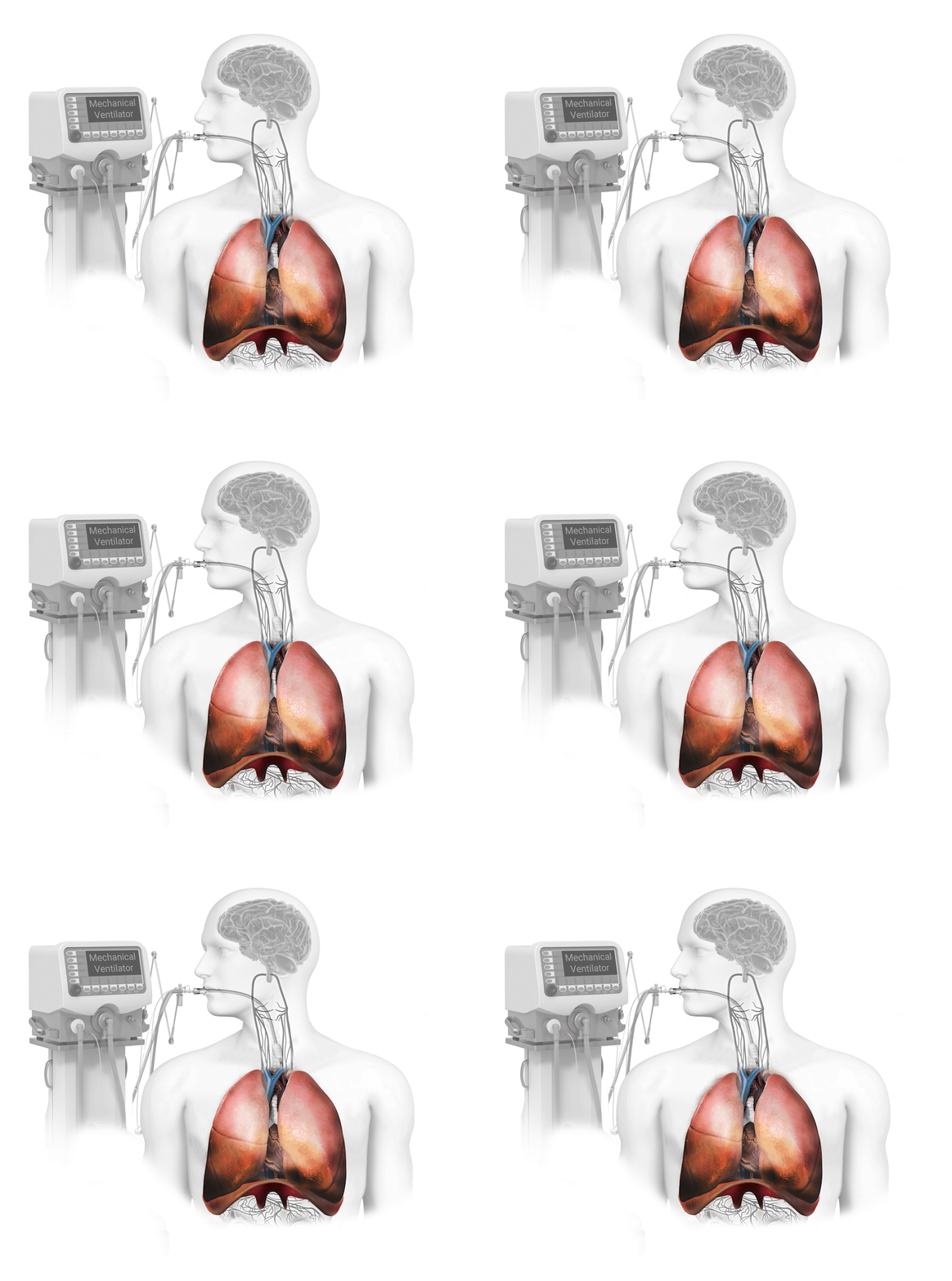
Because every day on
the ventilator counts

The first and only temporary transvenous diaphragm neurostimulation system for difficult-to-wean patients

Diaphragm Dysfunction Develops Rapidly During Mechanical Ventilation (MV) and is a Principal Driver of Weaning Failure

Diaphragm muscle can atrophy 50% in only one day on mechanical ventilation1 and this dysfunction produces an 8x greater risk of weaning failure2. The weaning process is responsible for 40-50% of total mechanical ventilation time3.

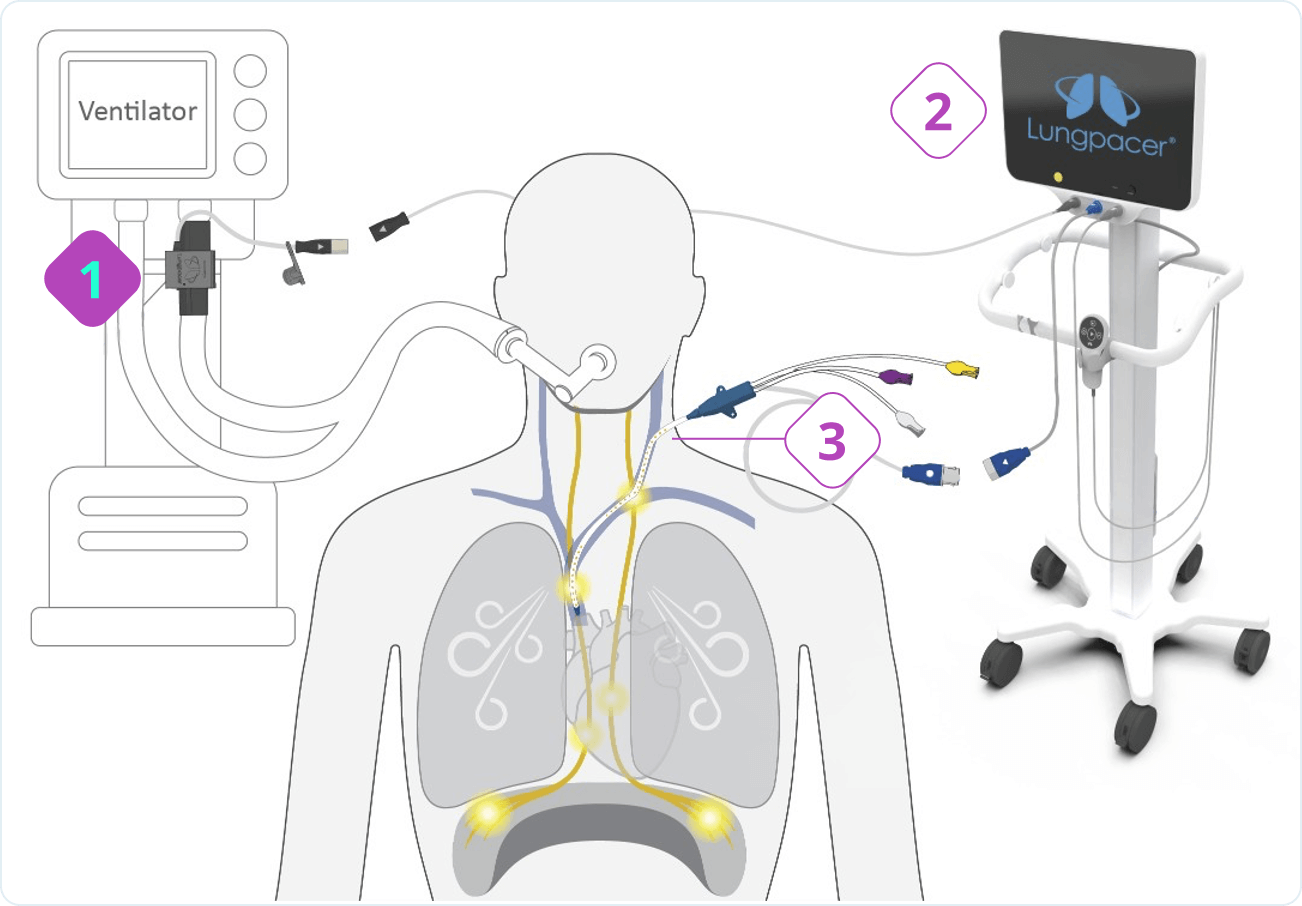
AeroPace is a Novel Temporary Transvenous Neurostimulation System That Stimulates Phrenic Nerves to Strengthen the Diaphragm

AeroPace Comprises Three Components That Integrate Seamlessly With Standard Clinical Workflows

1. Airway Pressure Sensor
  • Connects to the inspiratory limb of the ventilator to allow the system to identify ventilator and patient breaths to synchronize and coordinate with stimulation
  • Compatible with any ventilator for single-patient use
2. Neurostimulation Console
  • Intuitive touchscreen system provides continual and intermittent high-intensity TTDN with user-adjustable parameter
  • ECG-guided catheter insertion and placement
  • Simple mapping to select most-effective catheter electrodes
3. Temporary Transvenous
Neurostimulation Catheter
  • Temporary transvenous catheter with standard triple lumen CVC functionality
  • Includes 30 specialized electrodes in two arrays that stimulate both phrenic nerves to activate the diaphragm
  • Two sets of 60 stimulations delivered daily

Many ICU Patients may be Indicated to Benefit from AeroPace

The AeroPace® System (a Temporary Transvenous Diaphragm Activation System) is intended for temporary stimulation of the phrenic nerve(s) to increase diaphragmatic strength in mechanically ventilated patients.

The AeroPace System is indicated to improve weaning success – increase weaning, reduce ventilator days, and reduce reintubation – in patients ages 18 years or older on mechanical ventilation ≥ 96 hours and who have not weaned.

AeroPace is not for use with active implanted cardiac pacemakers, defibrillators, or other implantable electronics within proximity to the AeroPace Neurostimulation Catheter.

References:

1. Levine, S. (2008) NEJM; 358(13): 1327-1355. doi: 10.1056/NEJMoa070447; Dres, M. (2017) Am J Respir Crit Care Med; 195(1): 57-66. doi: 10.1164/rccm.201602-0367OC 2. Pu, H. (2023) BMC Pulmonary Medicine; 23(1): 343. doi: 10.1186/s12890-023-02633-y3. Boles, J.M. et al (2007) Eur Respir J.; 29(5): 1033-1056; doi: 10.1183/09031936.00010206

Contact Us